





圆筒试验
Cylinder Test
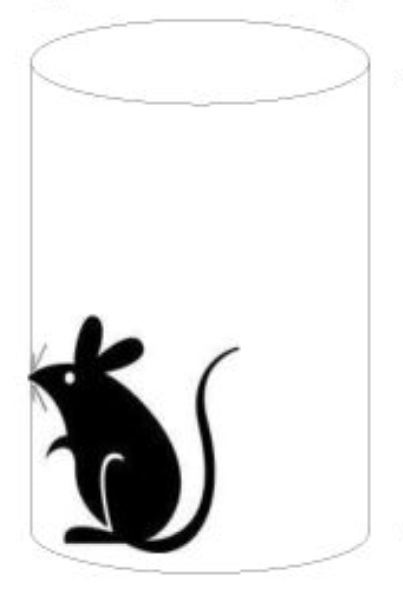
产品编号:CYL150905M,用于小鼠圆筒实验
产品编号:CYL203005R,用于大鼠圆筒实验
实验简介:
One of the most significant symptoms of stroke is sensorimotor asymmetry, which can be assessed by many behavior tests, including cylinder test. Cylinder test was initially used to evaluate spontaneous motor activity of the forelimbs after CNS injury. It was modified to test limb-use asymmetry after stroke. Generally, animals are placed in a clear cylinder container and their exploring behavior (use of forelimbs to contact the wall and land) is recorded with a camera. A mirror is placed behind the cylinder to enable recording when animals turn away from the camera. A total of 20 limb movements or a maximum of 10 minutes are recorded. By quantifying the percentage of impaired and non-impaired forelimb use for exploring and landing, limb-use asymmetry can be assessed. Since rodents are less likely to move after certain injuries, including stroke, this test can be performed in dark environment to encourage locomotion.
The cylinder test has been used to
determine limb use asymmetry in ischemic stroke. It was reported that mice used
ipsilateral forelimb much more frequently than contralateral limb after MCAO.
The asymmetry peaked at day 3 after injury, remained detectable at day 15 after injury, but
disappeared by day 40 after injury. In addition, mice with hypoxic ischemia showed more ipsilateral limb movements
compared to sham controls at days 10 and 21
after injury, indicating long-term limb asymmetry.
Similarly, rats with focal ischemia
displayed higher ipsilateral forelimb usage than pre-surgery baseline level up
to day 28 after injury. Interestingly, bone
marrow cell treatment significantly enhanced the recovery of ischemic rats, which exhibited no limb use
asymmetry in cylinder test at day 28 after
injury. Furthermore, in a long-term cortical ischemic study,
ischemic rats demonstrated a strong
asymmetry even at day 77 after injury. These results suggest that the cylinder test is a sensitive assessment for
long-term limb asymmetry in ischemic stroke and
can be used to evaluate neuroprotective effects of novel treatments.
In addition, the cylinder test can also be used in hemorrhagic stroke.
In the collagenase induced ICH model, rats showed increased ipsilateral limb
usage up to 4 weeks after stroke. Interestingly, rehabilitation treatment was able to improve
the performance of ICH rats in this test at day
28 after stroke, indicating faster recovery. Similar results are
also observed in autologous blood-induced ICH
model. For example, rats showed elevated ipsilateral
forelimb usage at day 28 after injury, and oxygenase inhibitor significantly improved the outcome by restoring contralateral
forelimb usage to baseline level at day 14 after
stroke. In sharp contrast to ICH, SAH rarely induces limb
asymmetry in the cylinder test, probably because
SAH causes global injury rather than unilateral damage in the brain.
The cylinder test is an easy and objective test for behavioral asymmetry. No special equipment and little administrative requirements are needed for this test. The cylinder test is able to detect long-term stroke outcome in both ischemic stroke and ICH models. However, the cylinder test is not useful for models with global brain injury, such as SAH.
 京公网安备11010802032317号